


22 Views Sep 10 linda-admin
Noticed more scalp than usual peeking through your part lately? Or maybe your crown looks a little less full in photos than it used to. This first moment of noticing is unsettling. It also usually comes with an assumption that the only fix is hiding everything under a full wig.
Hair loss rarely shows up as an all-over problem. It tends to start small, maybe with a widening part, a thinning crown, a receding temple, while the rest of your natural hair stays healthy and intact. Covering all of it with a full-coverage wig isn’t just unnecessary. It can feel like using a sledgehammer on a problem that needs a scalpel.
At Linda Alfieri Hair Transplant & Hair Replacement Cosmetic Medical Center in Boca Raton, the approach is built around precision, not concealment. Below are five modern, targeted alternatives worth knowing about before you write off anything short of a full wig.
Why a Full Wig Isn’t Always the Right First Step
Localized thinning, especially at the crown, along the hairline, or down the center part, leaves most of your natural hair untouched. A full wig ignores that. It covers healthy hair along with the thinning areas, which means you’re managing more coverage, more heat, and more upkeep than your actual hair loss calls for.
There’s also the day-to-day reality that full wigs can shift in wind or water, need regular refitting, and often feel like a costume rather than your own hair. When the loss is localized, a localized solution almost always looks and feels more natural.
Understand the lifetime of non-surgical hair replacement systems.
5 Targeted Alternatives to Full Wigs
1. Custom Hair Toppers & Top Pieces
Hair toppers are lightweight, breathable partial pieces designed to sit exactly where you need them. They’re matched to your color, texture, and density, then blended seamlessly into your existing hair.
Best for: Crown thinning, top-of-head volume loss, and widening part lines.
This is one of the most popular starting points for hair replacement for women in Boca Raton who want density back without touching the hair they still have.
2. Micro-Hair Systems & Volume Extensions
Think of these as precision, strand-by-strand additions rather than a full piece. Micro-hair systems and volume extensions integrate directly with your existing strands, adding density without glue, heat tools, or damage to the hair around them.
Best for: Diffuse thinning, overall lack of volume, or smaller localized patches.
You get noticeable fullness almost immediately, with none of the maintenance headaches that come with full coverage.
3. Regenerative Therapies (PRP & Exosome Treatments)
Not every thinning pattern needs an added piece. Sometimes the goal is waking your own follicles back up. PRP (platelet-rich plasma) and exosome treatments use your body’s own growth factors, delivered directly to the scalp, to stimulate follicles that have gone dormant.
Best for: Early-stage thinning, active shedding, and postpartum or stress-related hair loss.
It’s a cellular-level approach designed to help you grow your hair – not someone else’s.
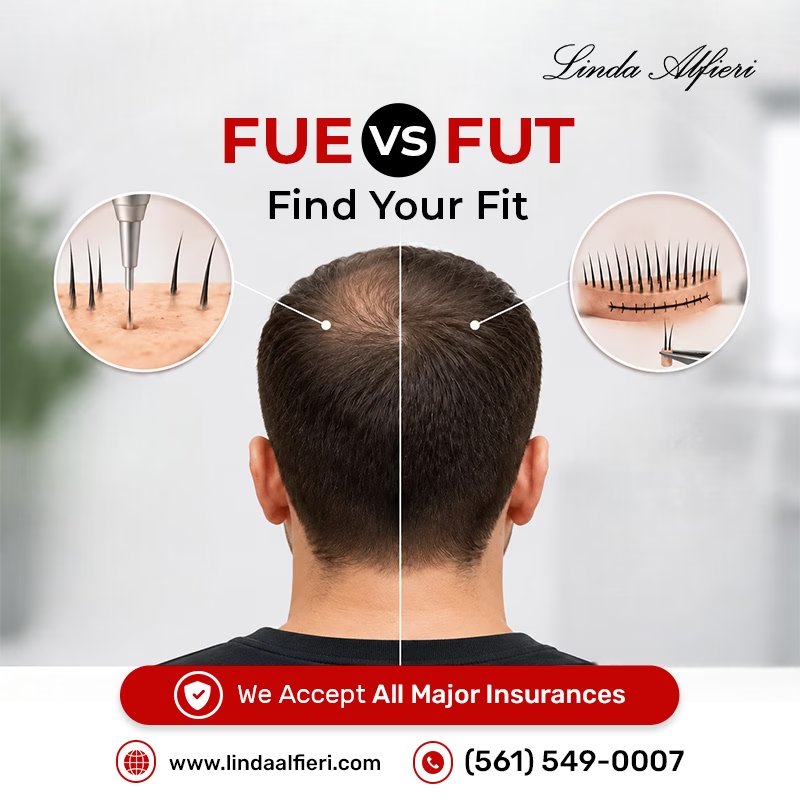
4. Targeted Surgical Hair Transplants (FUE & FUT)
For more defined loss, like a receding hairline, thinning temples, or a bald spot at the crown, surgical transplants relocate your own DHT-resistant follicles to the areas that need them.
Best for: Receding hairlines, temple loss, and well-defined crown thinning.
It’s a permanent, 100% natural result with zero ongoing hairpiece maintenance once you’ve healed.
5. Clinical Scalp & Follicular Recovery Regimens
Sometimes the smartest move is protecting what you have. Medical-grade topical formulations, growth serums, and low-level laser light therapy work together to support scalp health and strengthen active follicles over time.
Best for: Maintenance, early prevention, and general scalp health optimization.
These regimens are a core part of thinning hair replacement in Boca Raton for anyone who wants to slow things down before they progress further.
How to Choose the Right Solution for Your Scalp
The right option depends on a few key factors:
• Stage and pattern of your thinning: early, moderate, or advanced
• Scalp health and sensitivity: some treatments work better on certain scalp conditions than others
• Daily activity level and lifestyle: how much upkeep you’re realistically willing to do
None of this is something you should have to guess at on your own. A private, in-person assessment gives you a clear read on what’s actually happening with your hair and which of these five paths fits you best.
Learn how to choose the correct hair loss solution for male pattern baldness.
Take the First Step Toward Targeted Restoration
Hair restoration isn’t an all-or-nothing decision between doing nothing and wearing a full wig. It’s a spectrum, and most people dealing with hair loss land somewhere in the middle, with options far more targeted (and far less drastic) than they expected.
Ready to find out which solution fits your scalp? Call Linda Alfieri Hair Transplant & Hair Replacement Cosmetic Medical Center and schedule your private assessment today.