

29 Views Oct 02 linda-admin
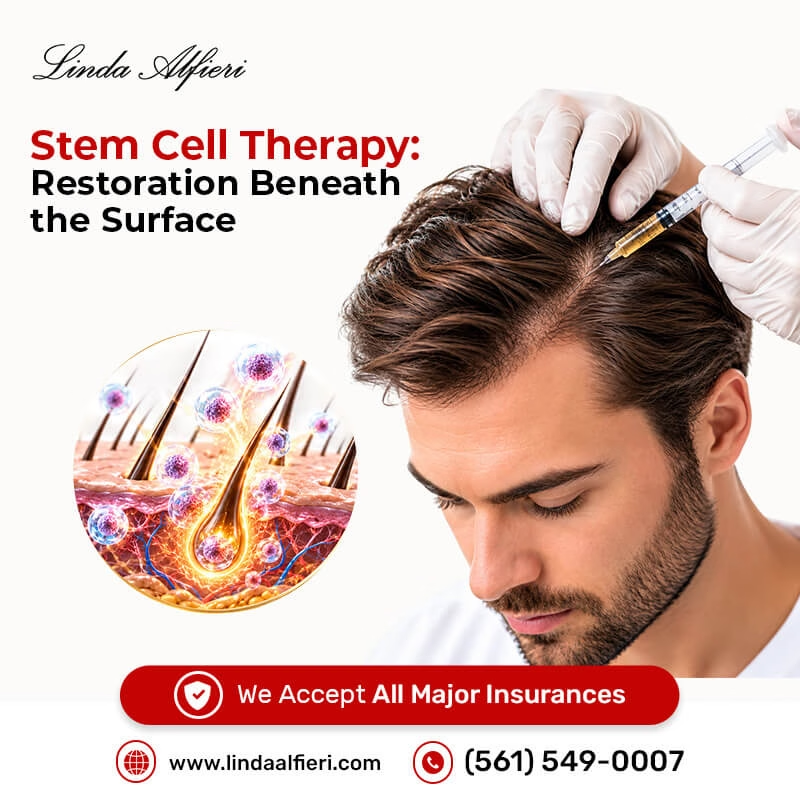
When someone comes in worried about thinning, they usually point to the part in their hair or the temples. That’s where you see the gaps. But what’s causing it is happening a few millimeters under the skin, which is why our approach to stem cell hair treatment in Boca Raton starts there.
If you’re reading this, you’ve probably already tried a few things. Most people have. Shampoos, foams, and serums sit on top of the scalp, and thinning that comes from follicles shrinking down deep doesn’t change much because of what’s sitting on the surface. Some of these products help a little. Very few of them touch what the follicle’s cells are actually doing.
So we ask something different: what is the follicle missing, and can we help it get that back?
Understanding the Role of Follicular Stem Cells
What’s going on inside the follicle
Each follicle has a small pocket of stem cells partway down its wall, and that’s where new hair comes from. When those cells get the right signals, they divide. Then the follicle builds a fresh strand.
The signals are chemical. Follicles and the tissue around them pass growth factors back and forth. When that exchange slows down because of age, hormones, inflammation, or years of stress, the stem cells just sit there. The follicle is still alive. It’s resting, and it isn’t getting the message to start up again.
Why that matters for treatment
A resting root still has all its equipment. That’s the thinking behind regenerative scalp therapy. You aren’t building something new; you’re restarting something that stalled.
A few common reasons follicles go quiet include:
- Hormone-driven shrinking, where every growth cycle produces finer, shorter hair
- Ongoing scalp inflammation
- Less blood supply to the follicle as time goes on
Learn how stem cell hair treatments can differ for men and women.
How Cellular Therapy Activates the Scalp’s Healing Response
Two things happen here, and they feed into each other.
Circulation
Growth factors delivered to the scalp encourage the tiny blood vessels around your follicles to work harder, so underfed roots get more oxygen and nutrients. This alone won’t fill in a bald patch. It does make the area a much better place for hair to grow.
Timing
Hair grows in cycles, and the active stretch, called anagen, is the part that gives you length and thickness. Thinning hair spends less and less time there. Targeted growth factors can push resting follicles back into anagen and help them stay longer. This is what hair follicle rejuvenation really means in practice.
How much you get out of it depends on how many viable follicles you still have. That’s what the assessment is for.
What We Focus on During Your Scalp Assessment
Your first visit is mostly us looking closely and asking questions. Expect to talk about when you first noticed the thinning, whether it runs in your family, and what you’ve already tried. That last one matters more than people think.
On the exam side, our medical team checks:
- Follicle density in thinning areas compared with healthier ones
- Scalp condition, including flaking, redness, or oiliness
- Where the loss is, since a widening part behaves differently from a receding hairline
- Strength of the donor area, in case a surgical option comes up later
Then we build your plan. Sometimes that’s regenerative therapy on its own. Sometimes it’s paired with treating an underlying cause. And if follicles in one area are gone for good, we’ll say so directly and talk about other routes.
What to Expect Throughout the Recovery Phase
The First Few Weeks
Right after a session, your scalp may feel tender or look a little pink. This usually settles within a few days. We’ll send you home with written aftercare. In general, go easy. Avoid hard scrubbing and skip heavy workouts for the first day or two. Living in South Florida adds its own questions, like when it’s okay to get back in the pool and how to handle a lot of sun on your scalp, so ask us, and we’ll give you specifics.
Plenty of people also ask how uncomfortable the procedure is. We walk through that before you decide on anything.
When You’ll See a Difference
Some people notice less shedding around two to three months, with fine new hairs showing up after that. Fuller density tends to build over six months or longer, and many plans involve more than one session. Keeping results going usually means managing whatever caused the thinning in the first place.
Explore the differences between PRP and stem cell treatment.
Exploring Comprehensive Restoration Pathways with Our Team
Stem cell treatment and hair restoration in Boca Raton can sit alongside the rest of what we offer at Linda Alfieri’s Cosmetic Medical Center. Some patients do well with regenerative therapy alone. Others pair it with medical therapy, or plan for a procedure down the road. Your assessment decides which.
If you want to know what’s happening under your scalp and whether stem cell hair treatment in Boca Raton fits your situation, book a consultation at our Boca Raton center. Bring your questions and a list of what you’ve already tried. It saves everyone time.