

1003 Views May 07 linda-admin
Hair loss does not usually show up all at once. It tends to creep in. You may notice more hair in the drain or that your part looks a little wider. A photo from a month ago suddenly feels different.
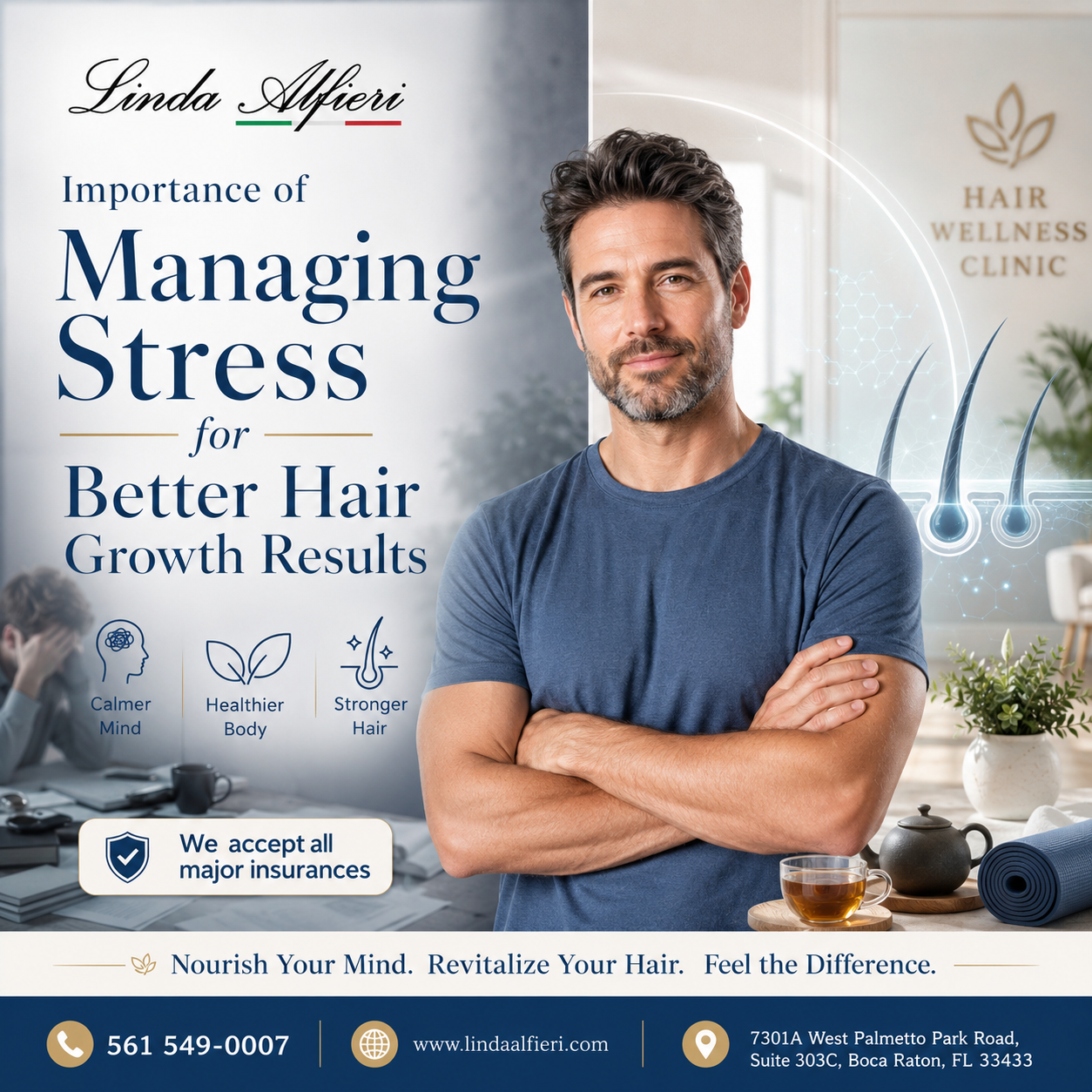
Stress is one of the reasons this happens. When pressure builds for too long, the body stops treating hair as a priority. It shifts energy toward coping, repair, and basic function. This means the scalp and follicles can get less support than they need.
When sleep is poor, stress is high, and the body is stretched thin, the results often lag behind expectations. It matters even more for someone considering a hair transplant in Boca Raton, Florida. Stress does not just cause more shedding. It can also make recovery slower, more uncomfortable, and less predictable after treatment.
Why Stress Shows Up in the Hair
Hair grows in cycles. Some strands are actively growing, while some are resting, and others are shedding naturally. Most people never notice that cycle because it stays balanced. Stress upsets that balance.
One common reaction is telogen effluvium. This is a condition where a stressor pushes more follicles into the resting phase than usual. The shedding often starts later, sometimes months after the event that triggered it. The trigger may be-
- Emotional strain
- Illness
- Surgery
- A major life change
- Poor sleep, or a long stretch of anxiety that never really lets up.
Cortisol, the main stress hormone, also plays a role. It helps the body respond to pressure. But when it stays high for too long, the scalp may not get the same level of support it normally would. This creates an unstable environment for healthy growth.
While stress is one of the reasons for hair loss, it is not the only one. Explore the top 10 signs that it might be time for a hair transplant.
What Stress Can Do After a Transplant
A transplant is not finished when the surgery ends. Recovery matters just as much as the procedure itself. New grafts need time to settle into the scalp. They need blood flow and a calm healing phase. They need the body working with them, not against them.
Stress can interfere with that in a few ways. For one, it can tighten blood vessels and make circulation less efficient. This is not helpful when the grafts are trying to establish themselves. Good blood supply matters during the early stages.
Stress can also keep inflammation high. When that happens, redness may last longer, swelling may feel more obvious, and the healing process can feel slower than expected.
Then comes the shedding phase after surgery. It is common for transplanted hairs to fall out before new growth begins. This does not mean the procedure failed. It is part of the process. Recovery takes time. The early stage is not the final picture. Patience matters more than people think.
Keeping Thinning Hair Care Simple
Not every person needs surgery right away. Sometimes a mix of medical support and everyday changes makes the most sense.
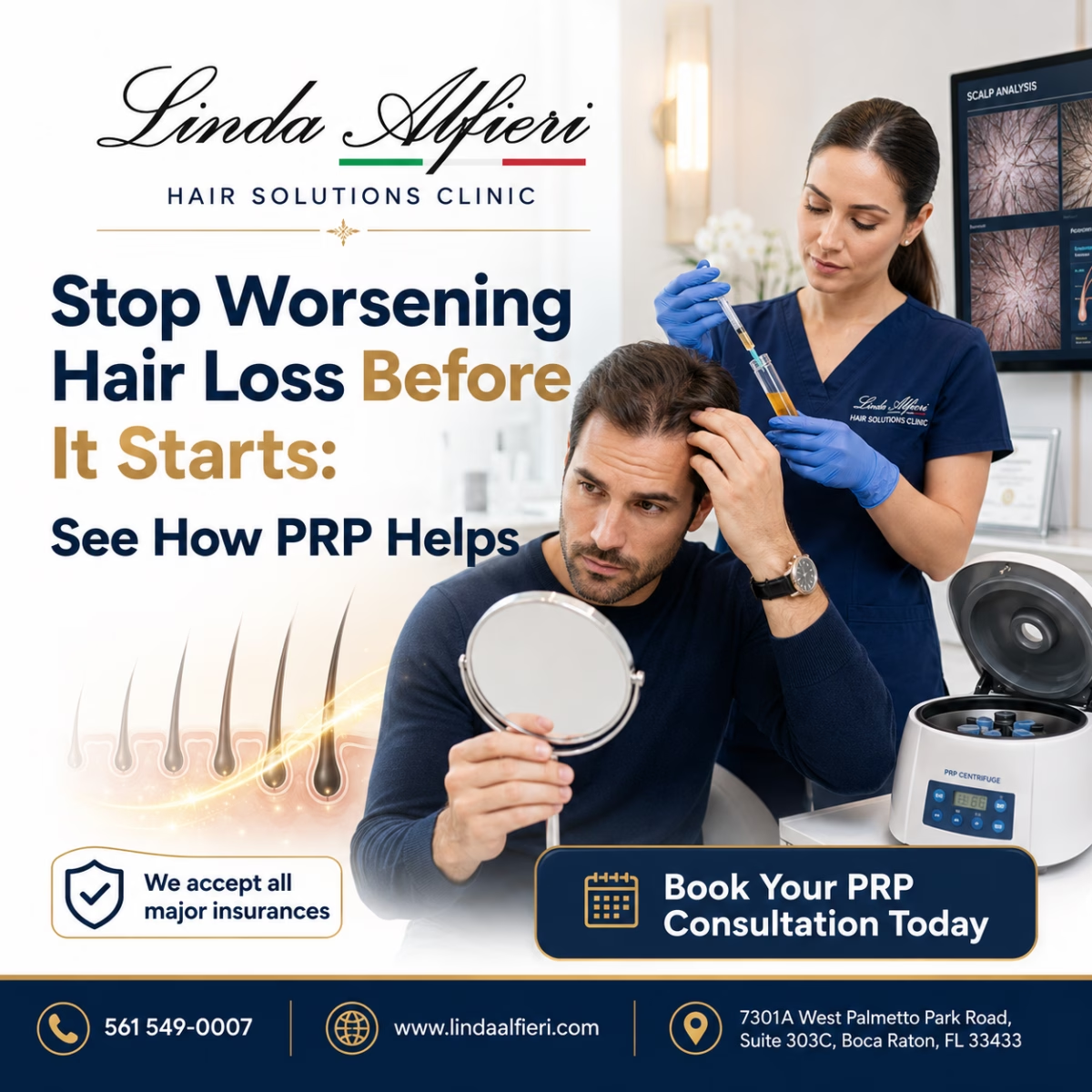
Several thinning hair treatments can fit different stages of hair loss and different goals. PRP is one option. It uses the patient’s own blood components to support healing and encourage hair growth. Hair systems can also help people who want fuller coverage while they figure out the next step.
Sleep is not optional here. Neither is food or rest. People under stress often eat on the run, skip meals, or rely on caffeine to push through the day. Hair notices that. So does the rest of the body. Protein, iron, zinc, vitamin D, and B vitamins all matter for strong growth. When those are low, hair often shows it first.
Why Professional Guidance Helps
It is easy to guess wrong when hair starts thinning. Stress shedding can look a lot like pattern thinning. Hormone changes often look similar too. So do thyroid issues, low iron, autoimmune conditions, and other medical concerns. This is why guessing rarely helps.
A proper evaluation gives you clarity. It helps separate temporary shedding from more lasting thinning. It also keeps people from spending time and money on the wrong solution. When you understand what is happening, you feel more in control. And that alone can lower stress a little.
Try Hair Transplant in Boca Raton at Linda Alfieri’s
Stress affects more than mood. It affects the body, the scalp, and the way recovery unfolds after treatment. This, however, does not mean the situation is hopeless. Once the cause is clearer, the next steps become easier to handle. Some people need medical treatment. Some need better routines. Many need both.
The important thing is not to wait too long or assume the problem will sort itself out. A thoughtful plan, a realistic timeline, and the right support can make a real difference.
If you are noticing extra shedding or planning treatment and want a better recovery path, it helps to speak with a team that understands the full picture. Contact our experts at Linda Alfieri’s Hair Transplant and Hair Restoration Center to learn more about what you need.